
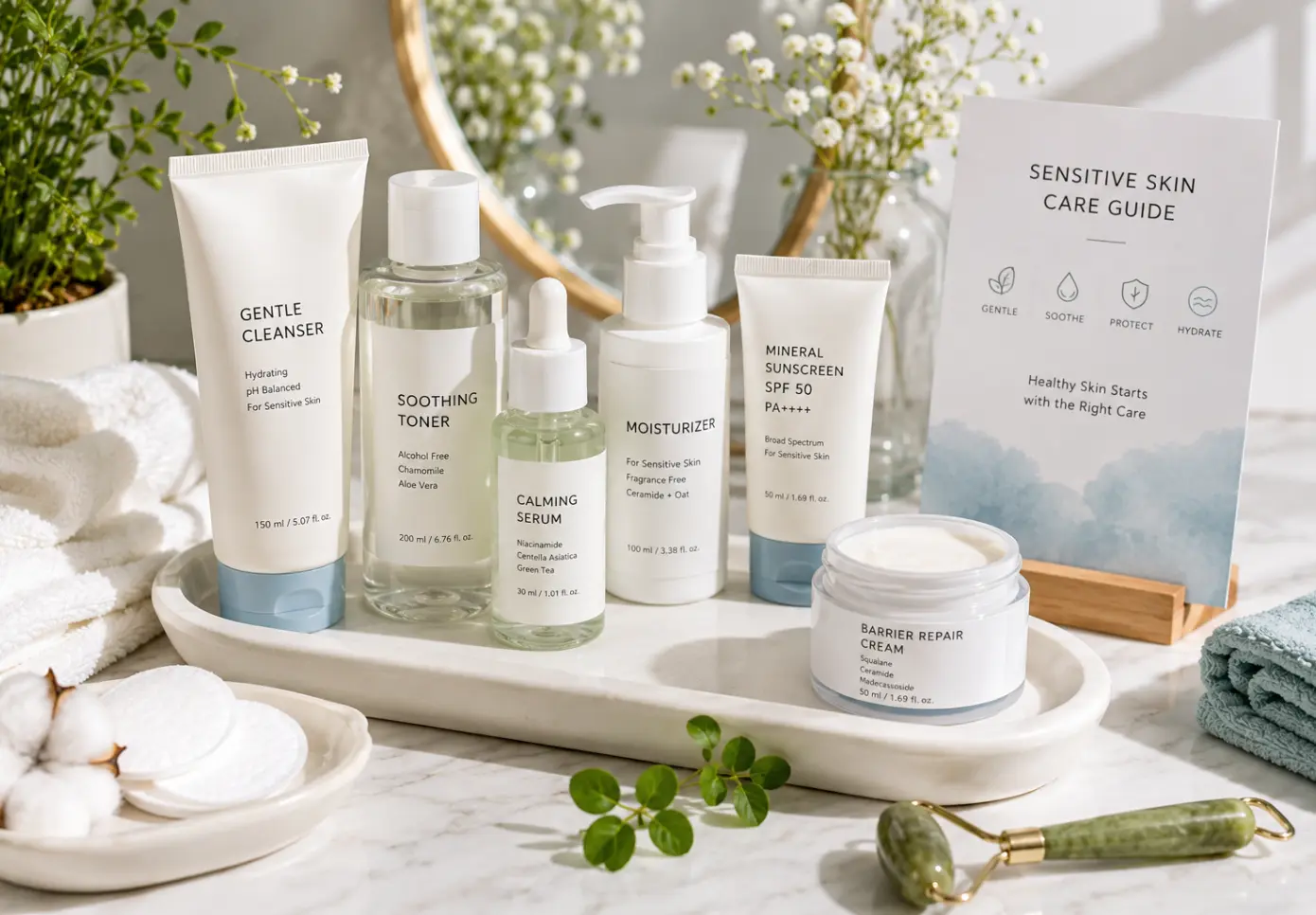
More than 44 percent of Americans report signs of sensitive skin, making it one of the most common skin conditions, though many people do not know exactly what is happening or what to do about it. The good news is that sensitive skin responds well to a consistent routine built around a few science-backed principles. The bad news is that it responds badly to almost everything else.
This guide covers what sensitive skin actually is, why it reacts the way it does, which ingredients to use and avoid, and step-by-step AM and PM routines you can follow regardless of your budget.
What Is Sensitive Skin? (And Why It Reacts)
Sensitive skin is technically a condition, not a standalone skin type, which means your skin can be oily and sensitive, dry and sensitive, or combination and sensitive simultaneously. The unifying factor is how the skin reacts: more intensely, more quickly, and to a wider range of triggers than non-sensitive skin.
The underlying reason comes down to the skin barrier. The outermost layer of skin (the stratum corneum) functions as a physical shield, keeping moisture in and irritants out. Research published in peer-reviewed dermatology journals has found that people with sensitive skin tend to have a more permeable stratum corneum, meaning this barrier lets things through more easily than it should. Moisture escapes faster. Irritants, pollutants, and allergens penetrate more easily. The result is the burning, stinging, redness, and dryness that characterize sensitive skin.
Environmental triggers that commonly worsen sensitive skin: dry or cold weather, pollution, hard water, sun exposure, and even lack of sleep. Product triggers include fragrance (the leading cause of contact dermatitis), alcohol, sulfates, essential oils, and certain preservatives.
Signs You Have Sensitive Skin
Your skin may be sensitive if it:
Feels tight and uncomfortable, especially right after cleansing. Turns red or blotchy after applying certain products or after temperature changes. Stings or burns when you apply toner, serum, or moisturizer. Reacts unpredictably from day to day, behaving well one week and reacting the next. Shows visible redness, small bumps, or patches of roughness. Gets irritated easily from friction, sun exposure, or environmental changes.
If your skin reacts with hives, blistering, or severe swelling, see a dermatologist rather than treating it as regular sensitivity. Those reactions may indicate an allergy or an underlying condition like rosacea, eczema, or contact dermatitis, which require specific medical treatment.
The Skin Barrier: Why This Concept Matters
Every good sensitive skin routine is really a skin barrier routine. When the barrier is functioning well, sensitive skin calms significantly. When it is compromised, even gentle products can trigger reactions.
The skin barrier is maintained primarily by ceramides (lipids that seal gaps between skin cells), natural moisturizing factors (amino acids, urea, and lactic acid that keep cells hydrated), and a slightly acidic surface pH (around 4.7 to 5.5) that keeps bacteria in check.
Many people with sensitive skin damage their barrier unknowingly by over-cleansing, using physical scrubs, applying too many active ingredients, or using foaming cleansers that strip natural oils. Rebuilding and protecting the barrier is the foundation of any sensitive skin routine.
Ingredients That Work for Sensitive Skin
These ingredients are well-tolerated and actively beneficial for sensitive skin:
Ceramides: Lipids that reinforce the skin barrier. Research consistently shows that ceramide-containing moisturizers reduce transepidermal water loss and improve barrier function over time. Look for formulas listing ceramide-NP, ceramide-AP, or ceramide-EOP.
Niacinamide (Vitamin B3): Reduces redness, strengthens the skin barrier, and has anti-inflammatory properties. Studies show niacinamide improves skin barrier function and reduces sensitivity. Well-tolerated by most sensitive skin types at concentrations of 2 to 5 percent.
Hyaluronic acid: A humectant that draws water to the skin surface and into the upper layers. Provides hydration without any irritation risk. Effective at all concentrations.
Glycerin: Another humectant, often found alongside hyaluronic acid. Deeply hydrating, inexpensive, and essentially non-irritating.
Centella Asiatica (CICA): A plant extract with clinically documented anti-inflammatory and barrier-repairing properties. Particularly popular in Korean skincare routines for sensitive skin. Look for it listed as centella asiatica extract, madecassoside, or asiaticoside.
Colloidal oatmeal: Recognized by the American Academy of Dermatology as an effective skin protectant. Soothes irritation, reduces itching, and reinforces the barrier. Excellent for very reactive or red skin.
Aloe vera: Anti-inflammatory and soothing. Works well for calming temporary redness and irritation. Most effective in formulas where it appears high on the ingredient list.
Zinc oxide: A physical mineral sunscreen active that sits on top of skin rather than absorbing into it, making it significantly less irritating than chemical sunscreen actives for sensitive skin.
Allantoin: A soothing agent that promotes cell turnover gently and reduces irritation. Commonly found in calming formulas for reactive skin.
Ingredients to Avoid
These ingredients frequently cause problems for sensitive skin:
Fragrance (synthetic and natural): The leading cause of contact dermatitis from skincare products. “Fragrance,” “parfum,” and “natural fragrance” are all red flags on labels. Essential oils also count as fragrance and are common sensitizers.
Alcohol (denatured): Listed as alcohol denat., ethanol, or SD alcohol, this drying alcohol can disrupt the skin barrier and trigger burning in sensitive skin. Not the same as fatty alcohols (cetyl alcohol, cetearyl alcohol), which are actually moisturizing.
Sulfates: Sodium lauryl sulfate (SLS) is particularly problematic. It is an effective cleanser but aggressively strips natural oils. Many people with sensitive skin can tolerate milder sulfates (sodium laureth sulfate, cocamidopropyl betaine) or prefer sulfate-free formulas entirely.
Strong AHAs and BHAs at high concentrations: Glycolic acid at 10 percent or above and salicylic acid at 2 percent or above can cause significant irritation on sensitive skin. Low concentrations (glycolic at 3 to 5 percent, salicylic at 0.5 percent) can work, introduced slowly.
Retinol: Powerful and effective for anti-aging but frequently irritating for sensitive skin, especially when starting out. If you want to use retinol, start with a very low concentration (0.025 to 0.05 percent) twice weekly and build tolerance slowly. Retinal and bakuchiol are gentler alternatives.
Physical exfoliants (scrubs): Beads, walnut shells, sugar scrubs, and similar physical exfoliants create micro-tears in sensitive skin and compromise the barrier. Chemical exfoliants at low concentrations are significantly safer.
Preservatives (certain types): Some preservatives, particularly methylisothiazolinone (MI) and methylchloroisothiazolinone (MCI), are common contact allergens. Parabens are less irritating than often perceived, but phenoxyethanol and ethylhexylglycerin are widely used and generally well-tolerated alternatives.
How to Patch Test New Products
Before adding any new product to your routine, patch test it. Apply a small amount to the inside of your wrist or behind your ear. Leave it on for 24 hours without washing. If no redness, itching, or burning appears, try it on a small area of your face for three to five days before incorporating it fully.
This step is particularly important with serums, toners, and exfoliants. A product that someone with normal skin uses without issue may cause a visible reaction on sensitive skin. Patch testing identifies this before you have applied it to your entire face.
AM Routine for Sensitive Skin
The morning routine focuses on gentle cleansing, hydration, and sun protection. Keep it simple. Adding too many products increases the chance of a reaction.
Step 1: Gentle cleanser. In the morning, many people with sensitive skin benefit from rinsing with cool or lukewarm water alone, especially if they applied a moisturizer or oil the night before. If you prefer a cleanser, choose a cream or milk formula without sulfates. Avoid foaming cleansers that leave skin feeling squeaky clean, that feeling is a sign of barrier disruption.
Step 2: Hydrating serum. Apply a few drops of a hyaluronic acid serum to damp skin. The moisture on your skin helps it draw in the humectant rather than pulling water from deeper layers. If your skin is also dry, layer glycerin over or under hyaluronic acid.
Step 3: Niacinamide (optional but recommended). Apply a niacinamide serum or use a niacinamide-containing moisturizer in the next step. If applying niacinamide separately, it goes before moisturizer.
Step 4: Moisturizer. Look for a moisturizer containing ceramides, glycerin, and ideally centella asiatica or allantoin. Apply while skin is still slightly damp from the serum. This is the barrier-repair step and the most important part of the morning routine for sensitive skin.
Step 5: Mineral SPF 30 or higher. This is non-negotiable for sensitive skin. UV radiation triggers inflammation that worsens sensitivity over time. Choose a mineral (zinc oxide or titanium dioxide) formula rather than chemical sunscreens, which more commonly cause stinging on sensitive skin. A tinted mineral SPF has the added benefit of color-correcting redness.
PM Routine for Sensitive Skin
The evening routine is when your skin does most of its repair. Provide the conditions for that repair without disrupting it.
Step 1: Oil cleanser (if you wore SPF or makeup). Oil-based cleansers dissolve sunscreen and makeup without stripping natural oils. Apply to dry skin, massage gently, and rinse. If you did not wear makeup or sunscreen, skip this step or cleanse with water only.
Step 2: Gentle second cleanser (if needed). If you double-cleansed with oil, a very gentle milk or cream cleanser removes any residue. Skip if you cleansed with water only. Avoid harsh cleansers at this step.
Step 3: Hydrating toner (optional). A hydrating toner containing hyaluronic acid or glycerin adds a layer of moisture without toner’s traditional astringent function. Avoid toners with alcohol or witch hazel.
Step 4: Serum. In the evening, you can incorporate calming or barrier-focused actives. Centella asiatica serums, ceramide serums, or low-concentration niacinamide serums all work well. If you are introducing retinol slowly, this is when you would apply it on designated nights, separated from any acid exfoliants.
Step 5: Moisturizer. In the evening, you can use a slightly richer version of your daytime moisturizer, particularly if your sensitive skin also skews dry. Overnight, the moisturizer supports barrier repair while you sleep.
Step 6: Facial oil (optional). A simple, unfragranced facial oil (rosehip, squalane, or marula oil) applied over moisturizer seals everything in and adds additional barrier reinforcement. Use this step in winter or when your skin is particularly reactive.
Sensitive Dry Skin: Adjustments
If your skin is both sensitive and dry, the approach is similar but with additional emphasis on occlusion and barrier repair.
Add a gentle facial oil to your evening routine as described above. Use a richer moisturizer both morning and evening. Consider a humidifier during winter months when indoor heating strips environmental moisture. Apply moisturizer to slightly damp skin every time, never dry. Avoid any astringent or drying ingredients entirely, including witch hazel, AHAs in the morning, and any product with alcohol in the first five ingredients.
Korean Skincare Routine for Sensitive Skin
The Korean skincare approach aligns well with sensitive skin needs because it prioritizes hydration over actives and introduces products in thin-to-thick layers. A simplified Korean-inspired routine for sensitive skin:
Oil cleanser, then a gentle low-pH water cleanser. Hydrating toner (sometimes called first essence in Korean skincare) applied by patting, not rubbing. Centella asiatica serum or essence. Lightweight moisturizer. Mineral SPF in the morning.
The “less is more” version of the 10-step Korean routine is actually ideal for sensitive skin: focus on the barrier-repair and hydration steps and skip the high-percentage actives. Centella asiatica and snail mucin (filtered secretion of snails, which contains hyaluronic acid and glycoproteins) are two K-beauty ingredients that work particularly well for sensitive skin.
Budget Skincare Routine for Sensitive Skin
Effective sensitive skin care does not require expensive products. Many drugstore brands formulate specifically for sensitive skin using appropriate ingredients.
Look for cleansers with no sulfates and a short ingredient list. A bottle of glycerin or pure aloe vera gel from the pharmacy covers the serum step at very low cost. Ceramide-containing moisturizers are available from CeraVe, Vanicream, and La Roche-Posay at accessible price points, and all three brands are recommended by dermatologists for sensitive skin. A simple zinc oxide sunscreen from a drugstore brand (mineral, unfragranced) fulfills the SPF step without the premium markup of specialty sunscreens.
Common Sensitive Skin Mistakes
Using too many products at once. Adding three new products in a week makes it impossible to identify which one caused a reaction. Introduce one new product at a time, wait at least one week before adding the next.
Over-cleansing. Washing the face more than twice daily, or with a cleanser every morning when one is not needed, progressively weakens the barrier. Less cleansing is usually better for sensitive skin.
Exfoliating too frequently. Once or twice per week is enough for sensitive skin, and only with gentle chemical exfoliants. More than this breaks down the barrier faster than it can rebuild.
Assuming “natural” means safe. Many natural ingredients, including essential oils, citrus extracts, and plant-based fragrances, are among the most common contact allergens. Natural origin does not equal low irritation risk for sensitive skin.
Ignoring SPF. UV exposure triggers an inflammatory response that worsens sensitivity over time and makes skin more reactive to everything else. Skipping sunscreen undermines everything else in the routine.
When to See a Dermatologist
A dermatologist consultation is worth pursuing when: your skin does not improve after consistently following a simple routine for 8 to 12 weeks, you develop hives, swelling, or blistering from skincare products, you suspect an underlying condition like rosacea, eczema, or psoriasis, or your sensitivity appeared suddenly after years of no issues (which may indicate a new allergy or medical cause).
The American Academy of Dermatology recommends that anyone experiencing persistent skin reactions consult a board-certified dermatologist rather than continuing to cycle through products.
Frequently Asked Questions
A minimal routine centered on barrier repair: gentle sulfate-free cleanser, hyaluronic acid serum, ceramide moisturizer, and mineral SPF in the morning. At night, a gentle cleanse, a calming serum or plain moisturizer, and an optional facial oil. Fewer products reduce reaction risk.
Ceramides, niacinamide, hyaluronic acid, glycerin, centella asiatica, colloidal oatmeal, aloe vera, and zinc oxide. These are clinically validated for tolerability and barrier support.
Fragrance (synthetic and natural), denatured alcohol, sodium lauryl sulfate, high-concentration AHAs and retinol when starting out, physical scrubs, and preservatives like methylisothiazolinone.
Apply a thin layer of an unfragranced product containing colloidal oatmeal, centella asiatica, or aloe vera. Keep the routine minimal: just cleanser, barrier moisturizer, and SPF. Avoid all actives until the redness resolves. Cool water compresses help reduce acute inflammation. If redness persists beyond a few days, see a dermatologist.
Yes, but introduce it extremely slowly. Start with the lowest available concentration (0.025 percent) twice weekly, applied after moisturizer to reduce irritation. If your skin cannot tolerate retinol, bakuchiol is a plant-based alternative with similar mechanism and significantly less irritation risk.