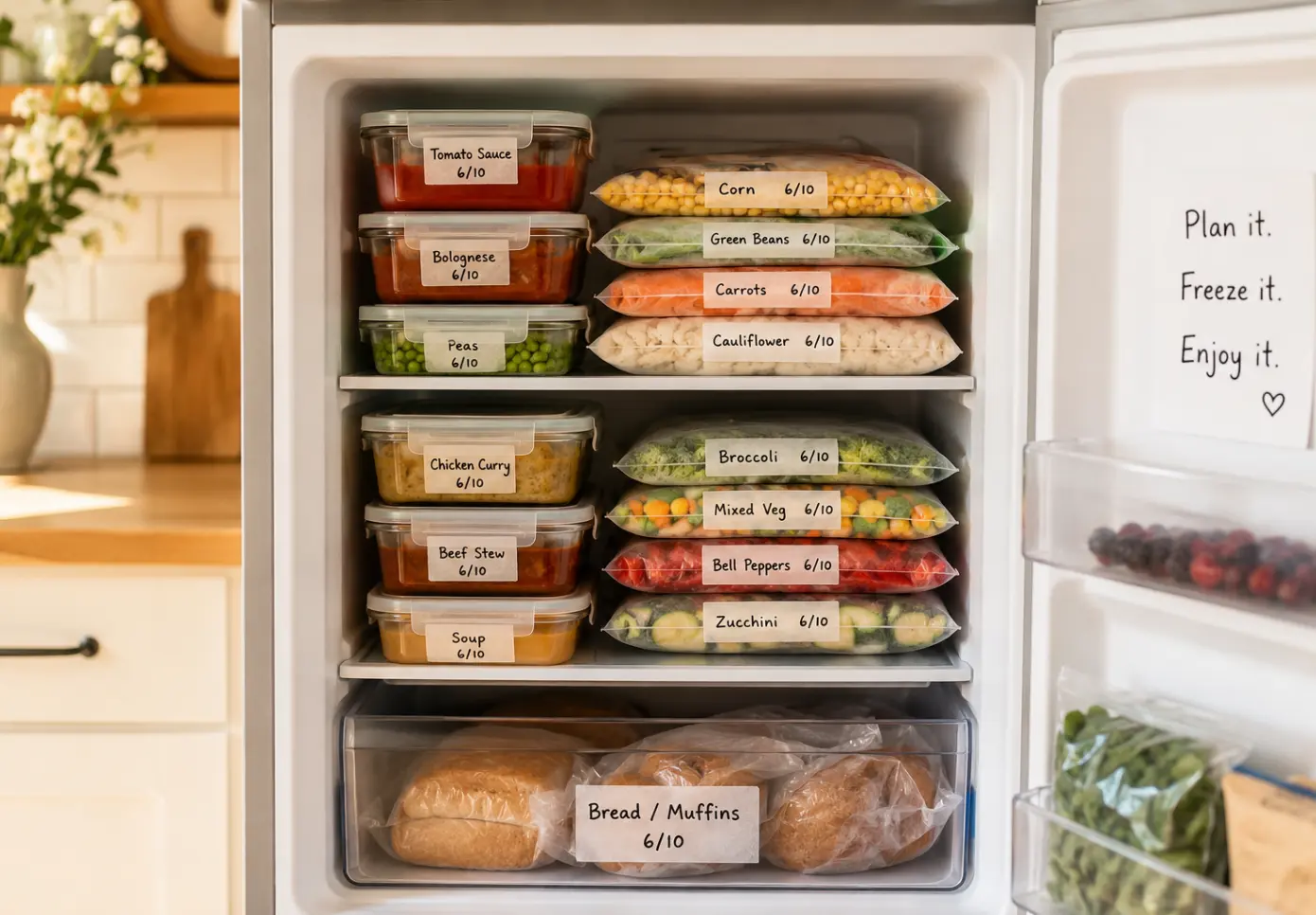
Freezing meals changes how you eat during the week. Instead of deciding what to cook on a Tuesday night when you are already tired, you open the freezer and pull out something you made on Sunday. That is the practical payoff of learning to freeze meals properly.
The technique matters because freezing done wrong produces mushy vegetables, rubbery proteins, and freezer-burned food that gets quietly thrown away. Freezing done right produces meals that taste close to freshly made and reheat in 10 minutes.
This guide covers everything: which foods freeze well, which do not, how to prepare and store meals for the freezer, how long they last, and how to reheat them properly.
Should You Freeze or Refrigerate Meal Prep?
Both have a place in a practical meal prep system. The decision depends on when you plan to eat the food.
Refrigerate meal prep you plan to eat within 3 to 4 days. Grains, proteins, and assembled dishes kept in the fridge are accessible immediately and do not require thawing. Most meal prep guides are built around the refrigerator for this reason: prep on Sunday, eat through Wednesday or Thursday.
Freeze meal prep you will not eat within that window. If you are cooking for a week and a half, or you are batch cooking to build a backlog of ready meals, freeze anything beyond the 4-day fridge threshold. Frozen meals extend your prep investment from 4 days to 3 months.
Many people use both simultaneously: refrigerate this week’s meals and freeze next week’s or the week after. This gives you a rolling supply without constant cooking.
The short answer: food you will eat in 1 to 4 days goes in the fridge. Anything beyond that goes in the freezer.
Foods That Freeze Well for Meal Prep
These categories survive the freeze-thaw cycle with minimal quality loss:
Proteins: Cooked chicken (cubed, shredded, or in sauce), ground meat (beef, turkey, chicken), beef stew, meatballs, cooked fish (particularly salmon and firm white fish), beans, lentils, and tofu (texture changes but works well in cooked dishes).
Grains and starches: Cooked rice, cooked quinoa, cooked pasta (slightly undercooked before freezing to account for softening on reheat), breakfast burritos, bread, muffins, and pancakes.
Soups, stews, and sauces: All soups freeze exceptionally well. Stews, chilis, curries, pasta sauce, pesto, and broth all hold their quality through freezing and reheating. These are the easiest and most rewarding category to freeze.
Assembled dishes: Lasagna (cooked or assembled uncooked), casseroles, shepherd’s pie, enchiladas, burritos, and most dishes with a sauce component freeze reliably.
Breakfast foods: Steel cut oats, egg muffins (without dairy on top), breakfast sandwiches, waffles, and pancakes all freeze well and reheat in minutes.
Vegetables (cooked or blanched): Corn, peas, edamame, broccoli (blanched), cauliflower, carrots (blanched), spinach, and kale all freeze well. Roasted vegetables with high water content are the exception.
Foods That Do Not Freeze Well
Knowing what not to freeze saves you from unpleasant surprises.
Watery raw vegetables: Cucumber, raw tomatoes, lettuce, cabbage, and celery turn limp and watery after freezing because ice crystals rupture their cell walls. These can only be used in cooked applications after freezing.
Dairy-based dishes: Regular yogurt, sour cream, ricotta, and cream-based sauces separate and become grainy when frozen. Cream cheese in a dish is borderline. Hard cheeses freeze fine. Coconut-based cream sauces tend to freeze better than dairy cream sauces.
Eggs in certain forms: Whole cooked eggs become rubbery. Fried eggs should not be frozen. Eggs cooked into dishes (scrambled eggs inside a burrito, for example) freeze acceptably.
Roasted vegetables: Roasted bell peppers, zucchini, eggplant, and similar vegetables with high moisture content become slimy and soft after freezing. If you plan to freeze, add these vegetables fresh when reheating rather than freezing them with the dish.
Raw potatoes: Uncooked and cut potatoes develop a strange, spongy texture after freezing. Cooked potatoes and fully cooked potato dishes freeze adequately. Whole raw baby potatoes used in slow cooker meals are the exception as they often freeze fine.
Pasta in certain cuts: Very small or delicate pasta (orzo, angel hair) becomes mushy after freezing. Larger cuts like lasagna noodles, rigatoni, and penne hold up significantly better. Undercook pasta by 2 minutes before freezing to prevent mushiness on reheating.
Uncooked mushrooms: Mushrooms release enormous amounts of water when frozen raw. Cook them fully before including in freezer meals.
| Freezes Well | Does Not Freeze Well |
|---|---|
| Soups, stews, curries | Cream-based sauces (dairy) |
| Cooked grains (rice, quinoa) | Raw watery vegetables |
| Cooked meat in sauce | Roasted soft vegetables |
| Meatballs | Whole cooked eggs |
| Beans and lentils | Yogurt and sour cream |
| Muffins, bread, waffles | Small delicate pasta |
| Blanched vegetables | Uncooked mushrooms |
| Breakfast burritos | Raw cut potatoes |
Best Containers for Freezing Meals
The container determines how long your food stays in good condition and how convenient it is to use.
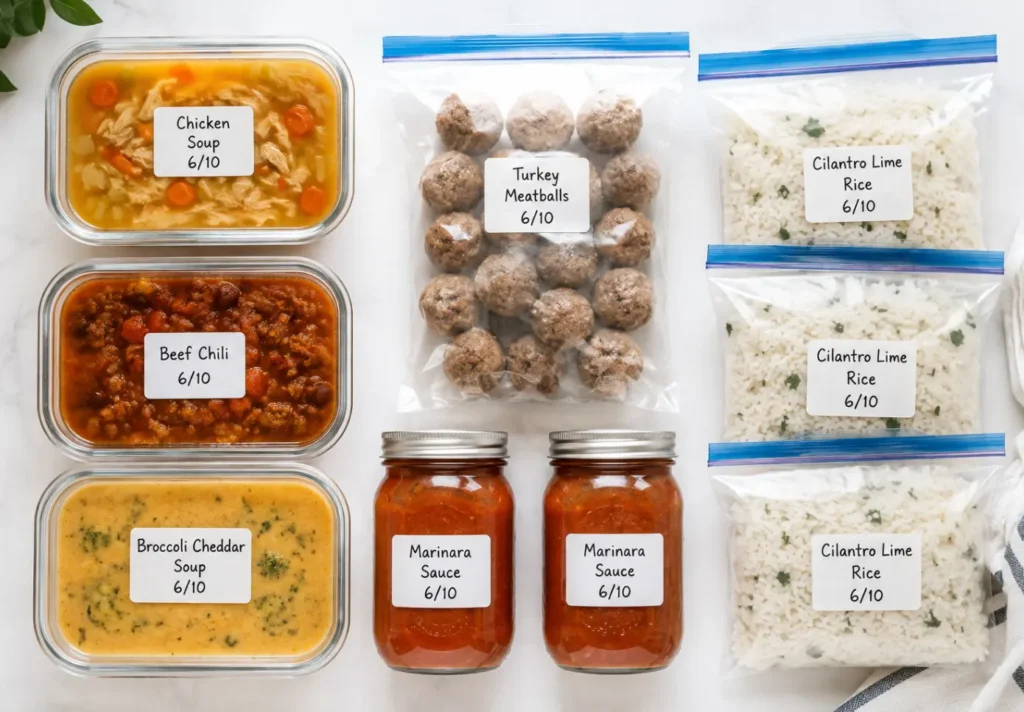
Freezer-safe glass containers: The most versatile and durable option. Good-quality glass containers (Pyrex, OXO, or similar) go from freezer to oven without shattering, provided you allow them to thaw partially first. Glass does not stain, absorb odors, or deteriorate. Fill them no more than three-quarters full to allow for expansion. Always cool food completely before placing glass in the freezer.
Mason jars: Work well for soups, sauces, and individual meal portions. Fill to no more than three-quarters, leave the lid loose or ajar until the contents are fully frozen, then seal. Use canning-quality mason jars only. Old pasta sauce jars and other repurposed jars are not designed to withstand freezing and may crack.
Reusable silicone bags: The best option for reducing plastic waste. They seal airtight, lay flat for efficient freezer storage, and are durable for years. Ideal for marinated proteins, portioned grains, and anything that does not need to go in the oven.
Heavy-duty freezer bags: Inexpensive, efficient, and useful for large batch items. Squeeze out all air before sealing to prevent freezer burn. Lay flat while freezing for space efficiency, then stack or store upright once solid. Standard zip-close bags are not freezer bags; freezer bags are thicker and seal more securely.
Aluminum foil containers: Useful for casseroles and baked dishes you plan to reheat in the oven without wanting to tie up a glass dish. Single-use, so less ideal if you are trying to minimize waste.
Ice cube trays: Excellent for freezing small portions of pesto, tomato paste, coconut milk, broth, and fresh herbs preserved in olive oil. Once frozen, pop the cubes into a labeled freezer bag.
How to Prepare Meals for Freezing: Step by Step
Step 1: Cool food completely before freezing. This is the most important step for both food safety and quality. Hot food placed in the freezer raises the internal temperature of surrounding food and creates condensation, which leads to freezer burn and ice crystal formation inside your meal. Allow cooked food to cool at room temperature for no more than 2 hours, then refrigerate until fully cold before transferring to the freezer. The FDA recommends never leaving cooked food at room temperature for more than 2 hours (1 hour if the ambient temperature is above 90°F/32°C).
Step 2: Portion before freezing. Freeze meals in the portions you will actually use. Freezing an entire pot of soup in one container requires thawing the entire thing at once. Portion soups into individual servings or two-serving portions before freezing. Proteins in sauce, curries, and stews all benefit from individual portioning. Grains (rice, quinoa) freeze well in 1-cup portions.
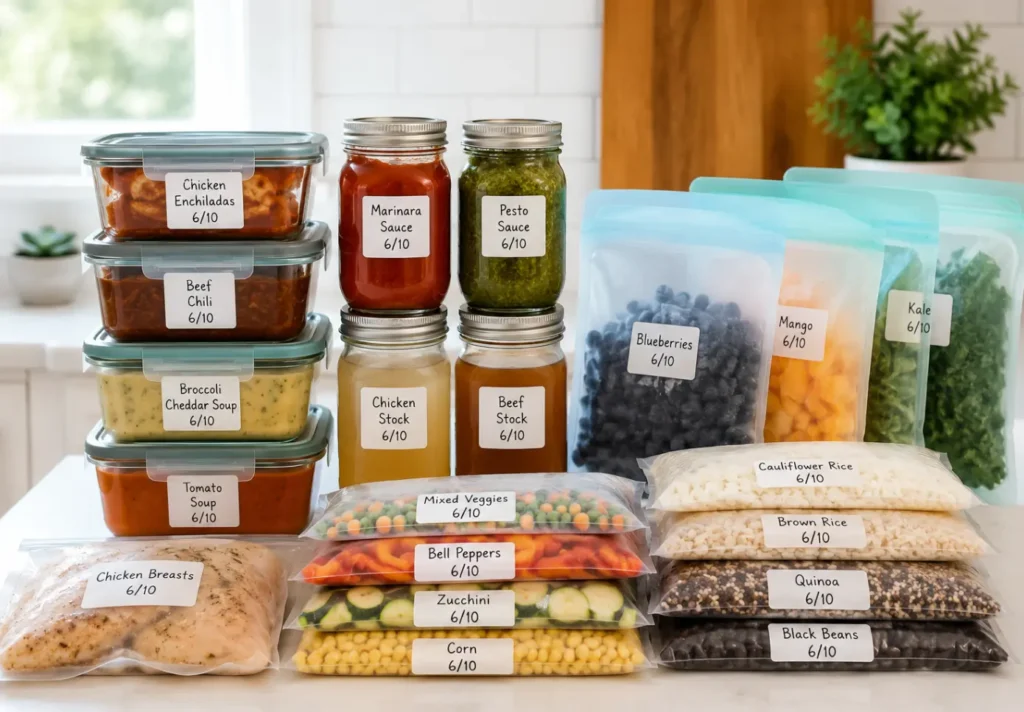
Step 3: Label everything. Label every container with the name of the dish, the date it was frozen, and brief reheating instructions. Use a permanent marker directly on freezer bags or on tape applied to glass containers. A frozen meal without a label is a mystery that often gets thrown away.
Step 4: Remove air. Air is the primary cause of freezer burn. Squeeze as much air as possible out of freezer bags before sealing. For glass containers and jars, fill as full as safely possible (leaving expansion room for liquids) to minimize air space.
Step 5: Freeze in a single layer initially. When freezing bags, lay them flat on a baking sheet until solid, then stack or store vertically in a bin. This keeps them organized and prevents them from freezing into an unwieldy lump.
How Long Do Frozen Meals Last?
Frozen food is technically safe to eat indefinitely as long as it stays frozen, but quality degrades over time. The USDA FoodKeeper guidelines provide recommended timelines for best quality:
| Food Type | Best Quality Within |
|---|---|
| Soups and stews | 2 to 3 months |
| Cooked meat in sauce | 2 to 3 months |
| Cooked poultry in sauce | 4 to 6 months |
| Ground meat (cooked) | 3 to 4 months |
| Cooked fish | 4 to 6 months |
| Cooked grains | 1 to 2 months |
| Casseroles | 2 to 3 months |
| Bread, muffins, waffles | 2 to 3 months |
| Breakfast burritos | 1 to 2 months |
| Beans and lentils | 2 to 3 months |
A practical guideline for meal prep: aim to consume frozen meals within 3 months for the best eating experience. After 3 months, quality declines noticeably and freezer burn becomes more likely, even with good packaging.
How to Prevent Freezer Burn
Freezer burn happens when air reaches the surface of frozen food, causing dehydration and oxidation. The result is grayish patches, a dry texture, and an off flavor.
Prevention methods: Wrap individual items like meatballs, burritos, or bread in a layer of plastic wrap or parchment before placing them in a freezer bag. This double layer significantly reduces air contact. Seal all freezer bags by pressing out every bit of air before zipping. Press from the bottom of the bag upward, then seal just before the last bit of air escapes. For glass containers, use a piece of plastic wrap pressed directly against the surface of the food before putting the lid on. Cool food fully before freezing: hot food creates steam inside the container that becomes ice crystals on the surface. Use food within the recommended timeframes above.
Blanching Vegetables Before Freezing
Blanching is a brief boiling followed by an ice bath plunge. It stops enzyme activity that causes vegetables to continue ripening and eventually degrade in the freezer. Without blanching, vegetables like broccoli, green beans, and carrots develop off flavors and mushy texture within a few weeks.
How to blanch: Bring a large pot of water to a full boil. Add vegetables in batches. Blanch for the recommended time (broccoli: 3 minutes, carrots: 2 minutes, green beans: 3 minutes, peas: 1 to 2 minutes, corn: 4 minutes). Transfer immediately to a bowl of ice water to stop cooking. Drain thoroughly, pat dry, and freeze in a single layer on a baking sheet before transferring to bags.
Softer vegetables like spinach and kale only need 1 to 2 minutes of blanching before the ice bath.
How to Thaw and Reheat Frozen Meals
Thawing safely: The safest way to thaw frozen meals is overnight in the refrigerator. Plan ahead by moving tomorrow’s meal from freezer to fridge the night before. Most individual portions thaw fully within 8 to 12 hours.
For faster thawing, submerge the sealed container or bag in cold water, changing the water every 30 minutes. A meal that takes 12 hours in the fridge typically thaws in 1 to 2 hours in cold water.
Never thaw food on the counter at room temperature. The outer layers of food enter the temperature danger zone (40°F/4°C to 140°F/60°C) while the center is still frozen, creating conditions for bacterial growth.
Reheating from the refrigerator (thawed): Stovetop: The fastest method for soups, stews, and saucy dishes. Add a splash of water or broth to prevent sticking. Heat over medium heat, stirring occasionally, until steaming throughout. Microwave: Works for most portioned meals. Cover loosely, heat in 90-second intervals, stirring between each, until fully hot. Oven: Best for casseroles and baked dishes. Cover with foil and heat at 350°F (175°C) until the internal temperature reaches 165°F (74°C).
Reheating directly from frozen: Soups and stews can go directly from the freezer into a pot with a small amount of water over low heat. Stir occasionally as the block breaks up. Individually wrapped breakfast items (burritos, sandwiches) can be microwaved from frozen: wrap in a damp paper towel and microwave in 2-minute intervals, flipping once, until heated through. Casseroles can go from freezer to oven if in an oven-safe dish: add 25 to 30 additional minutes to the original cooking time and check internal temperature before serving.
The one rule to always follow: Never re-freeze food that has been thawed. Once thawed, eat it within 3 to 4 days or cook it first (which changes its state) before freezing again.
Freezer Organization Tips
A disorganized freezer means food gets forgotten, develops freezer burn, and gets thrown out. A simple system prevents this.
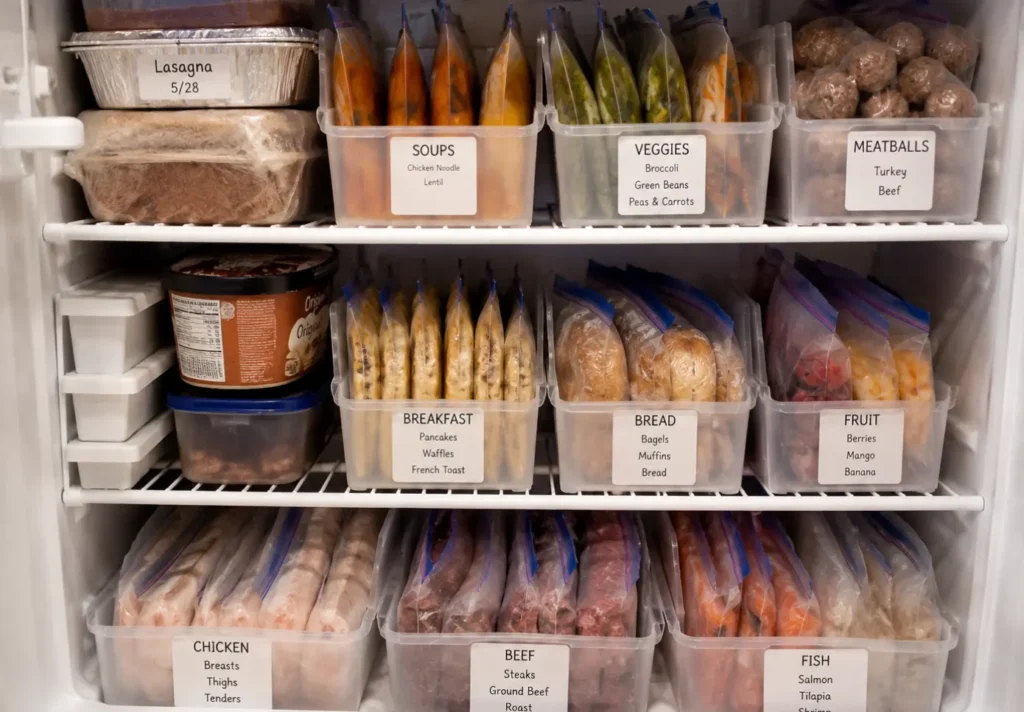
Use bins by category. Group similar items: one bin for soups and stews, one for breakfast items, one for proteins, one for sauces and condiments. When you need something specific, you go directly to the relevant bin rather than unpacking the entire freezer.
First in, first out. Place newer items at the back and older items at the front. When you reach for something, you naturally grab the oldest item first, which reduces waste.
Freeze bags flat. Flat frozen bags stack efficiently and can stand upright in a bin like file folders. This approach fits significantly more into a freezer than bags that froze in irregular shapes.
Monthly inventory check. Once a month, check what is in the freezer, note what needs to be used soon, and plan a week of meals around those items before adding new batches. This prevents the “mystery container” phenomenon where well-intentioned meal prep gets forgotten and eventually discarded.
Batch cooking as a dedicated activity on a free afternoon is one of the most practical uses of unstructured time. Loading the freezer in a single session means weeks of easier weeknights. Ideas for building a productive free-time habit around batch cooking are in the things to do with your free time guide, which covers productive and enjoyable ways to spend time that is not otherwise committed.
Frequently Asked Questions
Most cooked meals stay at best quality for 2 to 3 months. Soups, stews, and casseroles are typically best within 3 months; cooked poultry and fish last up to 6 months.
Yes. Rice freezes and reheats well. Undercook pasta by 2 minutes before freezing to account for softening on reheat. Larger pasta shapes hold up better than small delicate ones.
Fridge for meals you will eat within 3 to 4 days. Freezer for anything beyond that window.
Cool completely, portion into individual containers or freezer bags, label with date and name, remove as much air as possible, and freeze flat before stacking.
Yes, if the container is specifically rated for freezing. Fill no more than three-quarters full, leave lids ajar until fully frozen, and never transfer glass directly from freezer to a hot oven.
Soups, stews, curries, chilis, lasagna, casseroles, meatballs, breakfast burritos, and cooked grains with sauce. Anything with a sauce component works well.
Thaw overnight in the fridge, then heat in a covered pan with a splash of water or broth over medium-low heat until hot through. Casseroles reheat covered in the oven at 350°F (175°C).
Yes, if the container is labeled freezer-safe. Verify before use and never freeze in jars not designed for it, such as repurposed pasta sauce jars.