
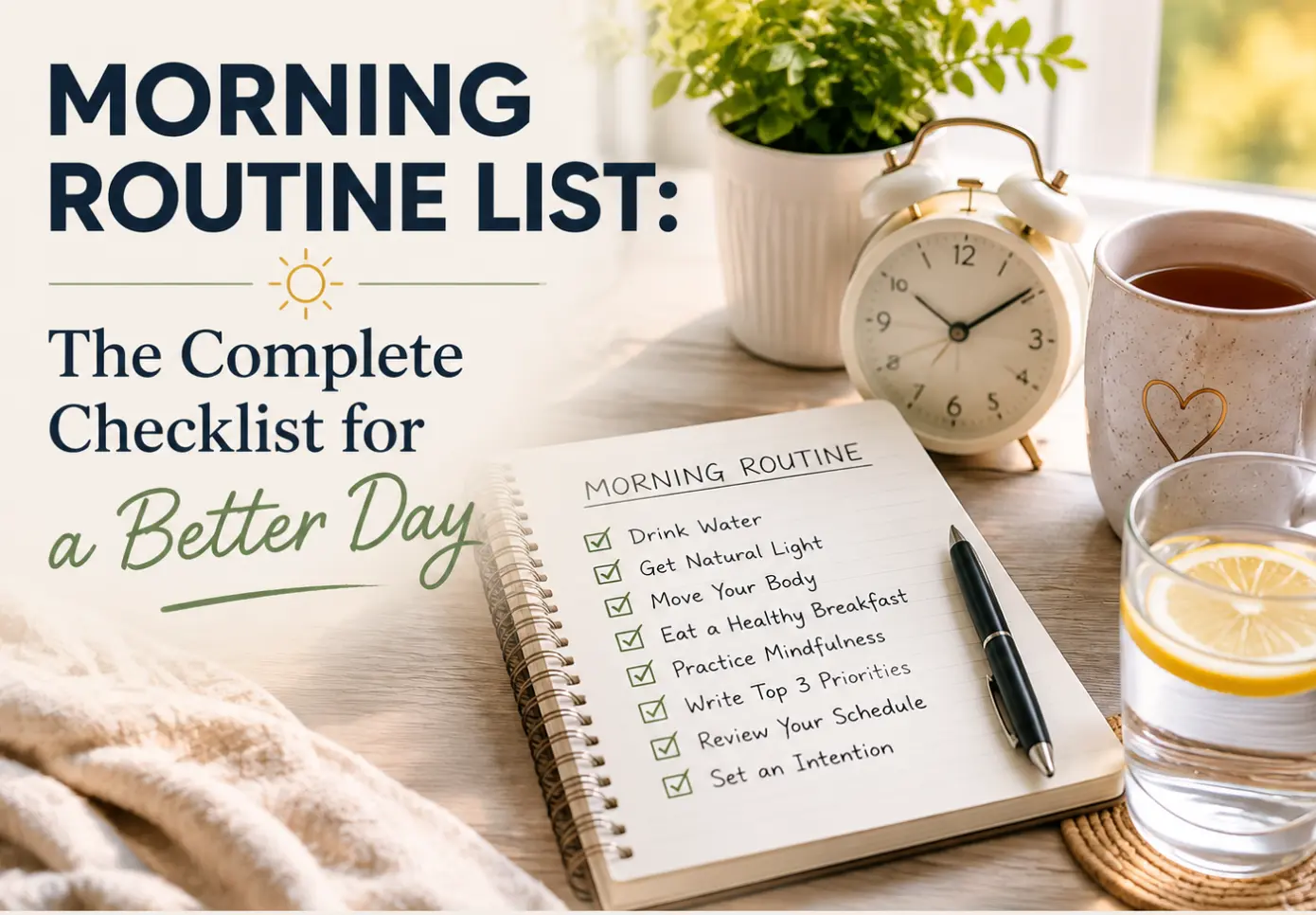
How your morning starts largely determines how the rest of your day goes. That is not motivational rhetoric. Research published in the American Psychological Association’s sleep and health resources consistently shows that structured mornings reduce cortisol levels, improve executive function, and produce more deliberate decision-making throughout the day.
The problem most people have is not motivation. It is structure. They want a better morning but do not know where to start, how long it should take, or what actually matters versus what is just productivity theater.
This guide gives you the complete morning routine checklist, organized by time available, lifestyle, and goals. Take what fits your situation and leave what does not.

Why Your Morning Routine Actually Matters (The Science)
The first 60 to 90 minutes after waking set your body’s hormonal and cognitive baseline for the day. Cortisol, the hormone responsible for alertness and motivation, peaks naturally within 30 to 45 minutes of waking. This window is called the cortisol awakening response, and according to research from the National Library of Medicine, what you do during this window directly affects your energy, focus, and stress resilience for the hours ahead.
Checking your phone immediately after waking pushes you into a reactive state during the exact window when your brain is most malleable. A structured routine does the opposite: it uses that window to prime your nervous system for intention rather than reaction.
A few other things research consistently confirms about morning routines:
Morning exercise improves executive function and working memory for 2 to 3 hours afterward, according to studies published in the British Journal of Sports Medicine. Drinking water within 30 minutes of waking rehydrates the body after 6 to 8 hours without fluids and improves cognitive performance measurably. Journaling for as few as 5 minutes reduces anxiety and improves emotional processing, with effects that persist through the day.
None of this requires a 5 AM wake-up or an elaborate hour-long ritual. It requires consistency with a few high-impact habits.
The Master Morning Routine Checklist
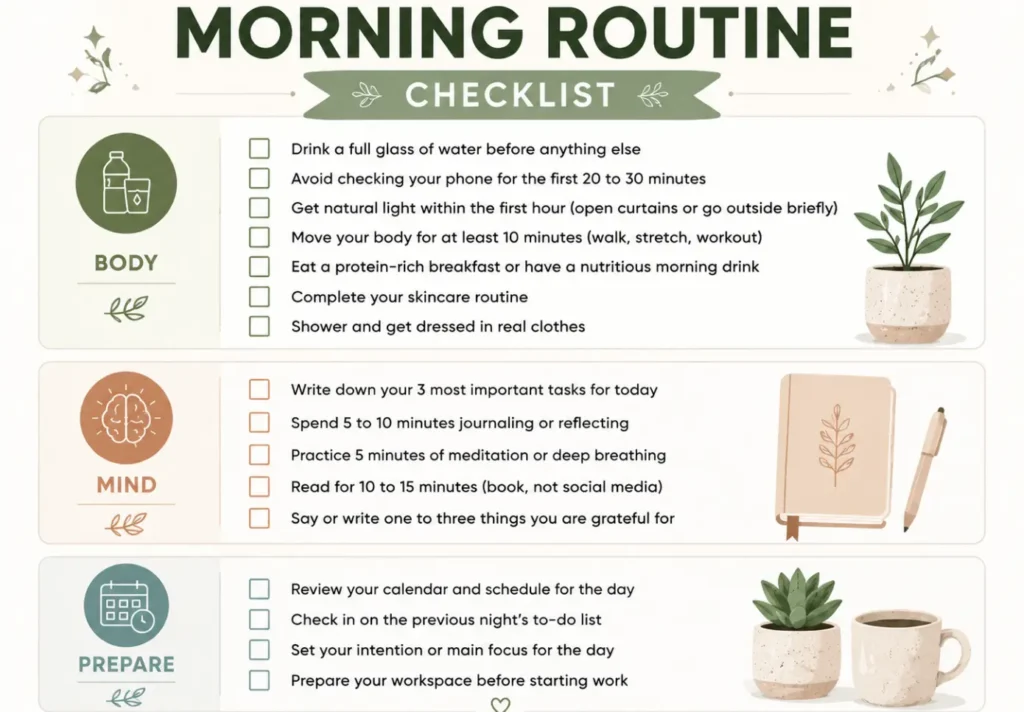
Body
- Drink a full glass of water before anything else
- Avoid checking your phone for the first 20 to 30 minutes
- Get natural light within the first hour (open curtains or go outside briefly)
- Move your body for at least 10 minutes (walk, stretch, workout)
- Eat a protein-rich breakfast or have a nutritious morning drink
- Complete your skincare routine
- Shower and get dressed in real clothes
Mind
- Write down your 3 most important tasks for today
- Spend 5 to 10 minutes journaling or reflecting
- Practice 5 minutes of meditation or deep breathing
- Read for 10 to 15 minutes (book, not social media)
- Say or write one to three things you are grateful for
Prepare
- Review your calendar and schedule for the day
- Check in on the previous night’s to-do list
- Set your intention or main focus for the day
- Prepare your workspace before starting work
Not every morning requires all of these. The sections below show you which to prioritize depending on how much time you have.
Morning Routine by Time Budget
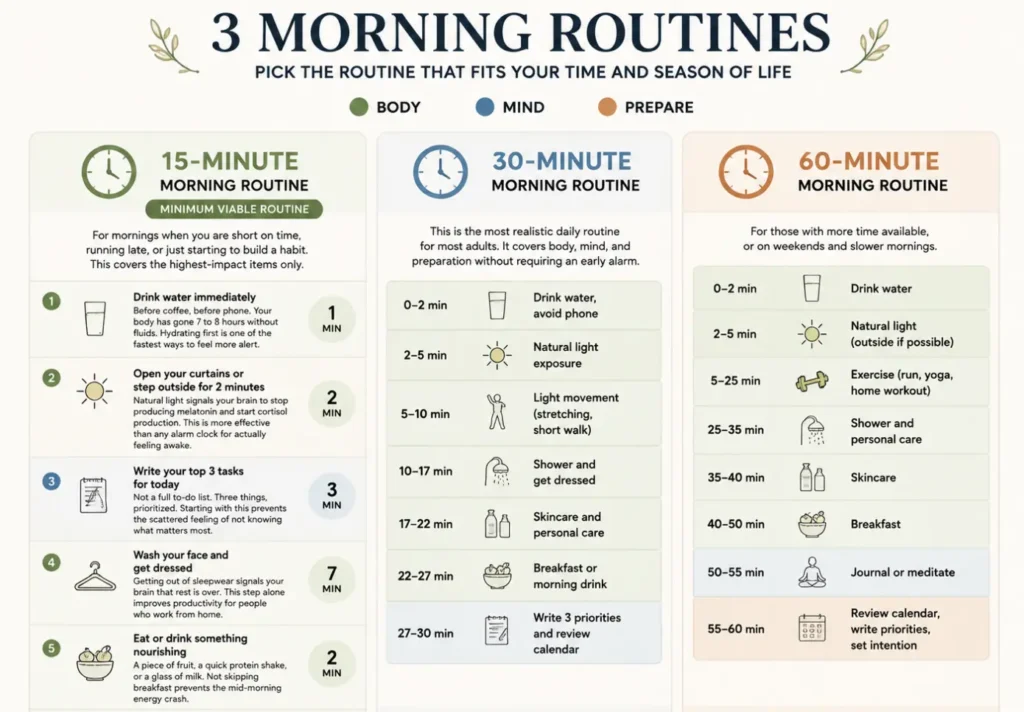
15-Minute Morning Routine (Minimum Viable Routine)
For mornings when you are short on time, running late, or just starting to build a habit. This covers the highest-impact items only.
1. Drink water immediately (1 minute) Before coffee, before phone. Your body has gone 7 to 8 hours without fluids. Hydrating first is one of the fastest ways to feel more alert.
2. Open your curtains or step outside for 2 minutes (2 minutes) Natural light signals your brain to stop producing melatonin and start cortisol production. This is more effective than any alarm clock for actually feeling awake.
3. Write your top 3 tasks for today (3 minutes) Not a full to-do list. Three things, prioritized. Starting with this prevents the scattered feeling of not knowing what matters most.
4. Wash your face and get dressed (7 minutes) Getting out of sleepwear signals your brain that rest is over. This step alone improves productivity for people who work from home.
5. Eat or drink something nourishing (2 minutes) A piece of fruit, a quick protein shake, or a glass of milk. Not skipping breakfast prevents the mid-morning energy crash.
Total time: 15 minutes. Consistent application of this minimum routine produces measurable improvements in focus and mood within 2 to 3 weeks.
30-Minute Morning Routine
This is the most realistic daily routine for most adults. It covers body, mind, and preparation without requiring an early alarm.
| Time | Activity |
|---|---|
| 0-2 min | Drink water, avoid phone |
| 2-5 min | Natural light exposure |
| 5-10 min | Light movement (stretching, short walk) |
| 10-17 min | Shower and get dressed |
| 17-22 min | Skincare and personal care |
| 22-27 min | Breakfast or morning drink |
| 27-30 min | Write 3 priorities and review calendar |
60-Minute Morning Routine
For those with more time available, or on weekends and slower mornings.
| Time | Activity |
|---|---|
| 0-2 min | Drink water |
| 2-5 min | Natural light (outside if possible) |
| 5-25 min | Exercise (run, yoga, home workout) |
| 25-35 min | Shower and personal care |
| 35-40 min | Skincare |
| 40-50 min | Breakfast |
| 50-55 min | Journal or meditate |
| 55-60 min | Review calendar, write priorities, set intention |
Morning Routine Checklist for Adults: By Lifestyle
Morning Routine for Women
A morning routine that works for women balances physical self-care with mental preparation and builds in enough flexibility for the unpredictable nature of managing responsibilities that often shift daily.
Skincare as a ritual, not a task. A dedicated skincare step in the morning doubles as a grounding ritual. Even a three-step routine (cleanser, moisturizer, SPF) takes under five minutes and begins the day with a concrete act of self-care. For a complete morning skincare approach for sensitive skin, the sensitive skin skincare guide covers the full AM routine with product recommendations.
Movement before phone. Women report significantly higher anxiety from social media first thing in the morning than men, according to multiple wellbeing surveys. Building in even 10 minutes of movement before touching a phone (a walk, yoga, or a quick stretch) consistently reduces this.
The Sunday prep session. Many women who maintain consistent morning routines do so partly because they set themselves up on Sunday evenings: laying out clothes, prepping lunches, reviewing the week’s schedule. This removes the morning decision load significantly.
Checklist additions specific to women:
- Skincare AM routine completed
- Outfit planned the night before
- Hair ready or planned
- Any supplements or prenatal vitamins taken with breakfast
- Wellness check-in: body, energy, and mood noted
Morning Routine for Men
Men’s morning routines tend to perform best when they are physically demanding early and then shift to mental preparation. Research on testosterone production shows it peaks in the morning, making early exercise more effective for performance outcomes.
Physical anchor first. A workout, a run, or even 15 minutes of bodyweight training as the first intentional activity of the morning tends to work better as a habit anchor for men than starting with journaling or meditation. The physical activity creates a sense of accomplishment that makes subsequent habits easier to maintain.
Cold or contrast shower. A cold shower or ending a warm shower with 30 to 60 seconds of cold water activates the sympathetic nervous system, increases norepinephrine (which improves mood and focus), and creates a brief moment of mental discipline that sets a useful tone for the day. This is optional but consistently mentioned by men who report high satisfaction with their morning routines.
Simplify the personal care routine. A reliable, quick personal care routine (face wash, moisturizer with SPF, teeth, grooming) that takes under 10 minutes is more sustainable than a complex one. Automation and consistency beat optimization.
Checklist additions specific to men:
- Morning workout or physical activity completed
- Face wash and moisturizer with SPF applied
- Cold or contrast shower element included
- Protein-rich breakfast (supports testosterone and muscle recovery)
- Three priorities written before opening email or work applications
The Night-Before Routine: The Habit Most People Overlook

The most underrated morning routine strategy is the night-before routine. Most people try to fix their mornings without addressing what happens the night before, which is where the morning routine succeeds or fails.
What a night-before routine covers:
Lay out tomorrow’s clothes. This removes one decision from the morning entirely. Decision fatigue is real and accumulates from the first choice you make. Starting the day without having to decide what to wear preserves cognitive resources for more important decisions.
Write tomorrow’s top 3 tasks. Doing this at night rather than in the morning allows your brain to process the priorities overnight. Many people find they wake with clearer thinking about the day when they have already named what matters before sleeping.
Tidy the space you will wake up in. A cluttered environment on waking increases cortisol and creates low-grade stress before the day begins. A five-minute tidy of the bedroom or kitchen the night before directly improves morning mood. The guide to organizing a small bedroom covers how to create an environment that makes this five-minute tidy habit sustainable.
No screens for 30 to 60 minutes before sleep. Blue light from phones and laptops suppresses melatonin production and delays sleep onset. This is the single night-before habit with the most direct impact on morning alertness.
Set your alarm for the right time (and only one alarm). Multiple alarms with snooze cycles fragment sleep and produce sleep inertia, the groggy, disoriented feeling that lasts 30 to 90 minutes after waking from incomplete sleep cycles. One alarm, set for when you genuinely need to get up, outperforms the snooze cycle every time.
Aesthetic Morning Routine Ideas
An aesthetic morning routine prioritizes the sensory experience of the morning alongside productivity. This approach, popular on Pinterest, Instagram, and among lifestyle creators, treats the morning as something worth experiencing rather than just getting through.
This is not superficial. Environmental design genuinely affects behavior. A morning environment that feels pleasant reduces the resistance to getting up and engaging with your routine.
Create a visual anchor. Keep a spot in your home: a window seat, a specific chair, a corner of the kitchen counter. That, that is specifically for your morning routine. A candle, a plant, a clean surface. When you associate a physical space with the routine, the environment itself becomes a cue.
The morning drink ritual. Whether it is coffee, matcha, warm lemon water, or a smoothie, preparing a morning drink slowly and intentionally creates a 5-minute mindfulness anchor. The ritual of making and drinking something warm is genuinely calming and helps the transition from sleep to wakefulness.
Natural light and plants. Natural light in the first 20 minutes of waking is one of the most effective morning habits backed by circadian rhythm research. Combining natural light with plants creates an environment that consistently improves mood. Even one plant near a window in the space where you spend your morning changes the sensory experience.
Journal with physical appeal. The journal you actually want to open is more effective than the one you feel you should use. A notebook that feels good to write in, a pen with good weight, a clear surface. These small aesthetic choices make journaling a ritual you look forward to rather than a box to tick.
Aesthetic morning routine checklist:
- One intentional morning drink, prepared slowly
- Natural light within the first 20 minutes
- Physical journal and pen you enjoy using
- A calm, tidy environment in your morning space
- Gentle music or silence (no news or high-stimulation audio first thing)
- Skincare as a paced, intentional ritual
- Getting dressed in clothes that feel good, not just functional
Calm and Mindful Morning Routine
A calm morning routine focuses on reducing stimulation rather than maximizing output. This approach works particularly well for people with anxiety, those recovering from burnout, or anyone who finds conventional productivity-focused morning routines overwhelming.
No phone for 60 minutes. This is the highest-impact single habit for a calm morning. The phone introduces other people’s priorities, anxieties, and demands into your first waking minutes. Protecting those minutes is the foundation of any genuinely calm morning.
Slow breathing before getting up. Before rising, take 5 to 10 slow, deliberate breaths. This activates the parasympathetic nervous system and reduces the cortisol spike that comes with the alarm. It takes 90 seconds and makes a measurable difference in the calm of the following hour.
Morning pages or stream-of-consciousness journaling. From Julia Cameron’s The Artist’s Way: write three pages of unfiltered stream-of-consciousness first thing in the morning, before your inner editor wakes up. This empties anxious thoughts from your head onto paper where they are less intrusive.
A walk without a destination. A 10 to 15 minute walk without a podcast, without a phone, without a purpose beyond moving is one of the most restorative calm morning habits available. The combination of movement, natural light, and absence of input produces a measurably more grounded mental state. Ideas for filling longer stretches of unstructured time well are explored in the things to do in free time guide, which covers both active and restful ways to spend time you are not filling with obligation.
Mindful morning routine checklist:
- No phone for first hour
- 5 to 10 slow breaths before rising
- Warm drink prepared slowly (no rushing)
- Morning pages or free journaling (no prompts)
- Gentle movement: walk, stretching, or yoga
- Eat breakfast without screens
- One intention for the day (one word or one sentence, not a list)
Morning Routine for Summer
Summer mornings are different. Longer daylight, higher temperatures, looser schedules, and (for parents) the absence of school structure all change what a morning routine needs to look like.
Move earlier or later. Exercise in summer heat is more effective and more comfortable before 9 AM or after 6 PM. Morning exercise in summer means going earlier or shifting to indoor options during the hottest months.
Hydration before caffeine. In summer, dehydration happens faster and earlier in the day. A full glass of water (or two) before coffee or other morning drinks becomes even more important in warm months.
Lighter breakfast. Heavy, cooked breakfasts that feel appropriate in winter often feel burdensome in summer. Fruit, yogurt, smoothies, and cold protein options work better in heat.
Take advantage of the early light. Summer mornings offer the earliest natural light of the year, which means the circadian rhythm benefit of morning light exposure is available earlier and more intensely than in other seasons. A 10-minute outdoor sit or walk during the golden hour is one of the genuinely pleasurable things summer mornings offer.
Build in unstructured time. Summer is one of the few seasons when a slower morning is socially and culturally available. Lean into that. A morning routine that includes intentional unstructured time (sitting on a porch, reading outside, doing nothing in particular) is not an abandoned routine. It is a seasonally appropriate one.
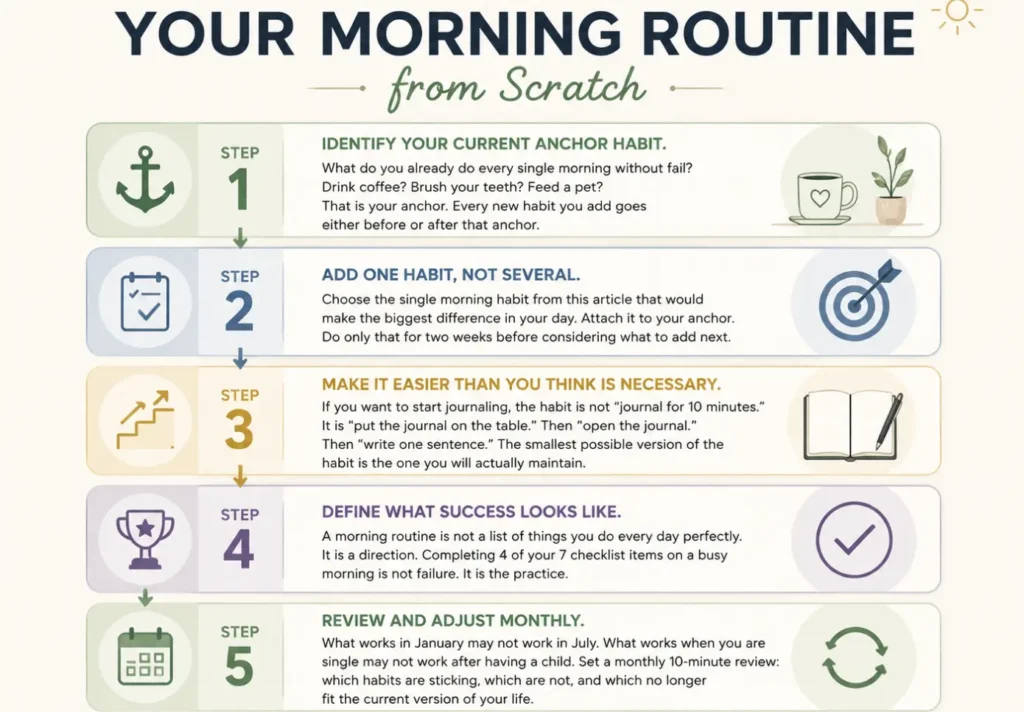
How to Build a Morning Routine from Scratch
If you currently have no morning routine, starting with a 10-habit checklist will not work. The research on habit formation, particularly from BJ Fogg’s Tiny Habits work and James Clear’s Atomic Habits, consistently shows that new habits attach most reliably to existing behaviors and start smaller than feels worthwhile.
Step 1: Identify your current anchor habit. What do you already do every single morning without fail? Drink coffee? Brush your teeth? Feed a pet? That is your anchor. Every new habit you add goes either before or after that anchor.
Step 2: Add one habit, not several. Choose the single morning habit from this article that would make the biggest difference in your day. Attach it to your anchor. Do only that for two weeks before considering what to add next.
Step 3: Make it easier than you think is necessary. If you want to start journaling, the habit is not “journal for 10 minutes.” It is “put the journal on the table.” Then “open the journal.” Then “write one sentence.” The smallest possible version of the habit is the one you will actually maintain.
Step 4: Define what success looks like. A morning routine is not a list of things you do every day perfectly. It is a direction. Completing 4 of your 7 checklist items on a busy morning is not failure. It is the practice.
Step 5: Review and adjust monthly. What works in January may not work in July. What works when you are single may not work after having a child. Set a monthly 10-minute review: which habits are sticking, which are not, and which no longer fit the current version of your life.
Morning Routine Planner: How to Design Your Own
A morning routine planner is a document or template that maps out your ideal morning hour by hour and habit by habit. The key elements of an effective planner:
Your wake time (consistent within 30 minutes every day, including weekends. This is the single most important variable for circadian health).
Your non-negotiables (2 to 3 habits that happen every morning regardless of what else does or does not). These are your baseline: the habits that define whether you had a morning routine at all.
Your variable habits (habits that happen on most days but may shift based on time available, energy, or schedule).
Your end time (when does the morning routine end and the workday or main daily activity begin? This boundary matters. Open-ended mornings tend to expand or contract based on mood rather than intention).
A simple weekly morning routine planner template:
| Day | Wake | Non-negotiables | Variables | Start work/day |
|---|---|---|---|---|
| Monday | 6:30 AM | Water, walk, 3 priorities | Meditation | 8:30 AM |
| Tuesday | 6:30 AM | Water, walk, 3 priorities | Journaling | 8:30 AM |
| Wednesday | 6:30 AM | Water, workout, 3 priorities | Reading | 8:30 AM |
| Weekend | 7:30 AM | Water, slow breakfast | Walk, reading | As needed |
The planner does not need to be more complex than this. What it needs to do is exist, be reviewed weekly, and evolve as your life changes.
Common Morning Routine Mistakes
Starting with your phone. Every researcher and practitioner on morning routines agrees on this one. The phone introduces reactive mode during the window when you are most capable of intentional mode. Even a 20-minute delay makes a measurable difference.
Making the routine too ambitious before it is established. A 90-minute morning routine that you do twice a week is worse than a 15-minute routine you do every day. Consistency outperforms ambition.
Optimizing for tomorrow rather than tonight. A poor night’s sleep, a chaotic bedroom, and no plan for the day destroy the best-designed morning routine. Fix the night before the morning.
Treating it as all-or-nothing. Skipping one habit does not mean the morning routine has failed. It means you skipped one habit. The morning routine continues.
Not protecting the first 20 minutes. The first 20 minutes after waking are genuinely the most neurologically significant period of the morning. Everything competes for this time: news, notifications, other people’s needs, yesterday’s unfinished business. Protecting those 20 minutes from external input is the foundational decision that makes every other morning habit possible.
Frequently Asked Questions
A functional morning checklist covers three areas: body (water, movement, breakfast), mind (journal, meditation, or priorities), and preparation (calendar review, task list). The specific habits within each area depend on your time available, lifestyle, and goals. Start with one habit from each area before adding more.
15 minutes is the effective minimum. 30 minutes covers most adults’ needs. 60 minutes allows for exercise, mindfulness, and deliberate preparation. The best duration is the one you will actually sustain consistently, which for most people is 20 to 45 minutes on weekdays.
Attach your first new morning habit to something you already do every day. Keep it simpler than feels necessary for the first two to three weeks. Add complexity only after the foundation is automatic. Track streaks without making a missed day catastrophic.
A strong morning routine for women includes a skincare ritual (doubles as self-care and grounding), movement before phone use, and a written priorities list. The night-before prep (choosing clothes, writing tomorrow’s tasks) significantly reduces morning friction for people managing complex responsibilities.
Physical activity as the first intentional act (before phone, before email) is the habit with the strongest consistency outcomes for men. A simple, fast personal care routine of under 10 minutes, followed by a protein-forward breakfast and a written task list, covers the essentials. Cold shower elements are optional but consistently mentioned as high-impact by men with established routines
An aesthetic morning routine deliberately designs the sensory environment of the morning: natural light, a prepared drink, plants, a physical journal, calm music or silence. It treats morning as something worth experiencing rather than just getting through. This approach improves morning habit adherence because the routine becomes pleasant rather than obligatory.
No. A morning routine is the set of habits you do in the first part of your day after waking, regardless of what time that is. A person who wakes at 9 AM can have an equally effective morning routine as one who wakes at 5 AM. Consistency of wake time matters more than earliness.