
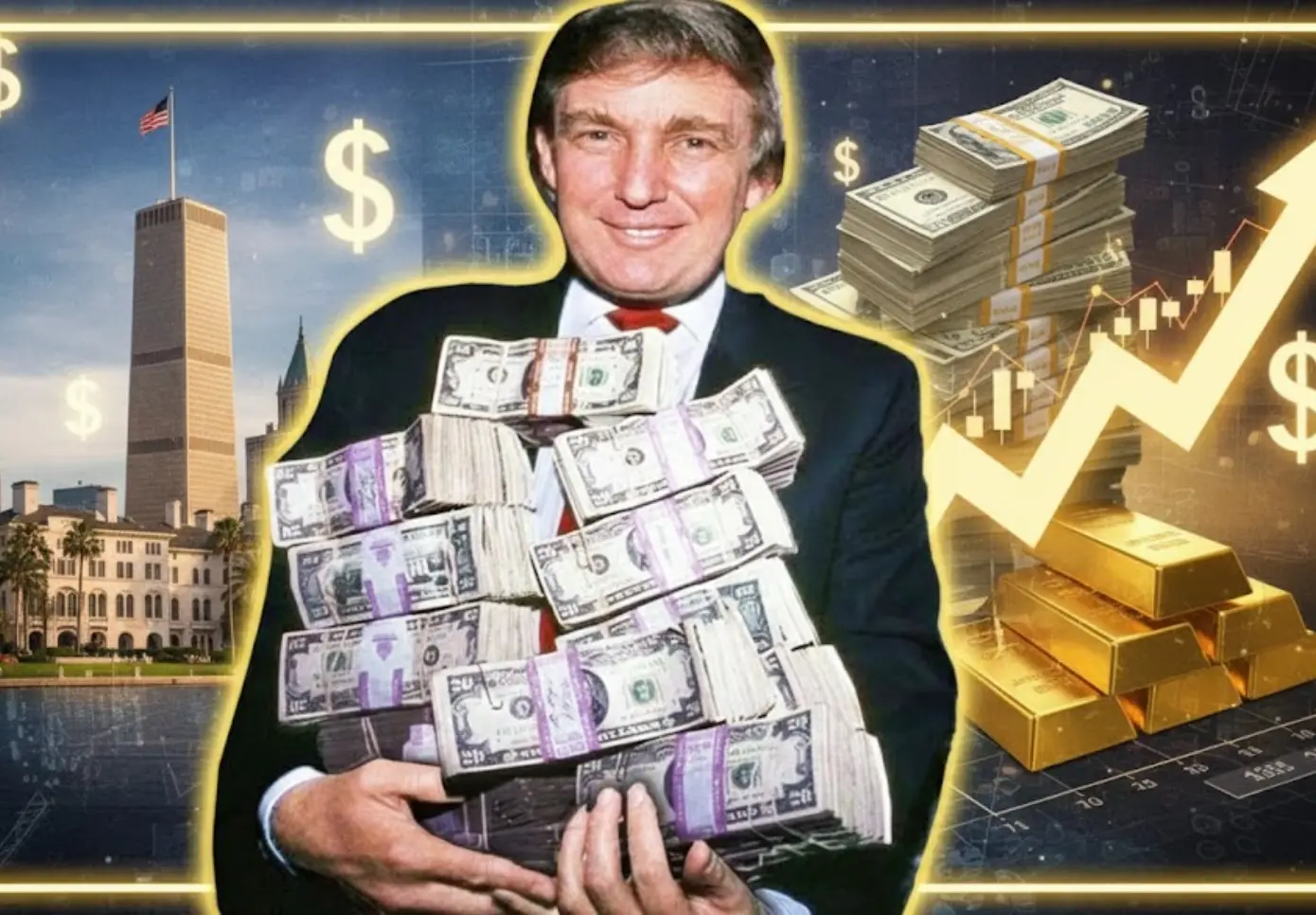
Donald Trump’s wealth has been a subject of fascination, controversy, and debate for decades. From Manhattan real estate developer to reality TV star to President of the United States and back to private business, Trump’s financial journey reflects both substantial success and notable setbacks.
This comprehensive analysis examines Trump’s net worth, his business empire, how he made his money, and how his wealth changed throughout his presidency and beyond.
Donald Trump’s Net Worth in 2025
Donald Trump’s net worth is estimated at $6.8 billion as of 2025, according to Forbes’ real-time billionaire tracking. This figure represents a significant increase from previous estimates, driven primarily by the valuation of Trump Media & Technology Group (Truth Social’s parent company) following its SPAC merger and public listing.
Trump net worth 2025 breaks down approximately as:
- Trump Media & Technology Group stock: $3.2 billion
- Real estate portfolio: $2.4 billion
- Golf courses and resorts: $870 million
- Brand licensing and other assets: $330 million
Net worth estimates for Trump vary widely among sources due to valuation differences on privately held real estate, brand value debates, and undisclosed liabilities. Some financial analysts place his wealth as low as $3.5 billion, while Trump himself has claimed figures exceeding $10 billion.
Trump’s Billionaire Status
Yes, Donald Trump is a billionaire by all credible financial tracking metrics. Even the most conservative estimates place his wealth well above the $1 billion threshold.
The debate centers on whether he’s worth $3.5 billion, $6.8 billion, or his personally claimed $10+ billion, not whether he qualifies as a billionaire. Trump first achieved billionaire status in the 1980s during the New York real estate boom, though he nearly lost that status during the early 1990s recession when his casinos and properties faced financial difficulties.
The Real Estate Foundation
Real estate remains the core of Trump’s wealth, generating billions in value across commercial and residential properties nationwide.
Trump Tower and Manhattan Holdings
Trump Tower, the 58-story skyscraper at 721 Fifth Avenue in Manhattan, serves as both Trump’s primary residence (the famous three-story penthouse) and a major asset. The building is estimated to be worth $500-700 million, with Trump owning the commercial space and many residential units. His personal stake in the property is valued at $400-500 million.
Other significant Manhattan holdings include 40 Wall Street, a 70-story office tower worth approximately $500 million, along with stakes in 1290 Avenue of the Americas (30% ownership valued at $400 million), Trump Park Avenue ($140 million), and Trump Plaza ($90 million).
These Manhattan properties form the backbone of Trump’s real estate empire, generating steady rental income while appreciating in value over decades of ownership.
Mar-a-Lago Estate and Private Club
Trump purchased Mar-a-Lago in Palm Beach in 1985 for $10 million, including $3 million for furnishings. Today, conservative estimates place the value at $300-400 million, while Trump’s own assessment claims over $1 billion. The property sits on 17 acres of prime oceanfront real estate in one of America’s most expensive ZIP codes.
The mansion contains approximately 62,500 square feet with 58 bedrooms, 33 bathrooms, and a 20,000-square-foot ballroom. Trump converted Mar-a-Lago into a private club in 1995, charging initiation fees currently ranging from $200,000 to $700,000 plus annual dues of $14,000 or more. The club generates several million dollars annually in membership revenue.
Golf Course Empire
Trump owns or operates approximately 17 golf courses across the United States, Scotland, Ireland, and Dubai. Major golf properties include Trump National Doral in Miami, featuring a 643-room hotel and four golf courses valued at over $400 million. Trump National Golf Club in Bedminster, New Jersey, has hosted major tournaments and is valued at $100+ million.
International holdings include Trump Turnberry in Scotland, a historic course purchased for $60 million now valued significantly higher, and Trump International Golf Links in Ireland, a coastal course valued at $50+ million. Collectively, Trump’s golf portfolio is estimated at $800-900 million, though individual course valuations vary based on revenue generation and market conditions.
Hotel and Residential Properties
Trump directly owns several hotels and licenses his name to others. The Trump International Hotel & Tower in Chicago is a mixed-use building valued at $200+ million. Trump International Hotel in Las Vegas is a 64-story tower where Trump owns individual units rather than the entire building.
Trump also developed numerous residential buildings where he sold individual units but maintains ownership of some inventory and common areas, generating ongoing revenue streams. His real estate holdings across multiple property types provide diversified income sources that stabilize his overall wealth.
Building the Trump Fortune
Trump’s wealth accumulation followed several distinct phases spanning five decades, beginning with substantial family advantages and evolving through various business ventures.
Family Wealth and Early Advantages
Trump grew up wealthy in Queens, New York. His father, Fred Trump, was a successful real estate developer who built middle-class rental housing in Brooklyn and Queens. According to New York Times investigations, Trump received at least $413 million from his father’s real estate empire through various loans, gifts, and inheritance structures, far more than the “small loan of $1 million” Trump publicly claimed.
Fred Trump’s net worth at death was estimated at $250-300 million, built through decades of developing affordable housing with government financing programs. Trump joined his father’s company in 1968 after graduating from Wharton, initially managing family rental properties before pursuing Manhattan developments.
Manhattan Development Boom
Trump’s fortune exploded during the 1980s New York real estate boom. He developed or renovated the Grand Hyatt Hotel with Hyatt Corporation, Trump Tower in 1983 as his signature development, and multiple Atlantic City casino properties.
Trump became a media fixture after publishing “The Art of the Deal” in 1987, which solidified his reputation as a dealmaker and built his personal brand into a valuable asset. His high-profile lifestyle and self-promotion made him synonymous with luxury and success during the excess-driven 1980s.
Financial Crisis and Restructuring
The early 1990s recession hit Trump’s empire hard. Atlantic City casinos struggled with debt, and several properties faced foreclosure. Trump personally never filed bankruptcy, but six Trump-related business entities filed for Chapter 11 bankruptcy between 1991 and 2009.
These bankruptcies included Trump Taj Mahal (1991), Trump Plaza Hotel (1992), Trump Hotels and Casinos Resorts (2004), and Trump Entertainment Resorts (2009, filed twice). The restructurings allowed Trump to reduce debt and retain partial ownership while creditors absorbed losses.
As of 2025, Trump reportedly carries $400-600 million in debt across various properties, mostly traditional real estate loans secured by properties worth significantly more than the loan amounts.
Brand Licensing Era
Trump pivoted toward brand licensing in the 2000s, earning millions by licensing his name to buildings, products, and ventures he didn’t actually own or develop. This strategy required minimal capital investment while generating substantial royalty income.
“The Apprentice” television show (2004-2015) revitalized Trump’s brand, paying him over $200 million during its run and introducing him to mainstream America beyond business circles. The show’s catchphrase “You’re fired!” and Trump’s boardroom persona created cultural impact that enhanced his brand value significantly.
Presidential Impact on Wealth
Trump’s net worth before his 2016 presidential campaign was estimated at $4-4.5 billion by most sources. His presidency had complex effects on his wealth, initially causing declines before recent recovery.
Comparing his wealth trajectory:
- 2016 (pre-presidency): ~$4.5 billion
- 2021 (post-presidency): ~$2.5 billion
- 2025 (current): ~$6.8 billion
During his presidency, Trump’s net worth declined due to reduced hotel and golf course revenue amid political controversies, Manhattan real estate value decreases on Trump-branded properties, COVID-19 pandemic impacts on hospitality businesses, and lost licensing deals as companies distanced themselves from political associations.
Truth Social and Media Ventures
Truth Social launched in February 2022 as Trump’s alternative social media platform following his ban from Twitter, Facebook, and other major platforms after January 6, 2021. Trump Media & Technology Group merged with Digital World Acquisition Corp through a SPAC deal in 2024, taking the company public.
Trump owns approximately 60% of Trump Media, creating his most valuable single asset on paper. The company’s market valuation has fluctuated between $3-8 billion depending on stock price movements, with Trump’s personal stake representing $2-4 billion.
The platform’s actual business performance remains modest compared to its stock valuation. Truth Social generates limited advertising revenue and has struggled with user growth compared to established social media giants, raising questions about whether current valuations reflect sustainable business fundamentals or speculation.
The Trump Organization Structure
The Trump Organization serves as the umbrella company for Trump’s business ventures, operated as a private family business with Trump’s children in executive roles. The organization encompasses approximately 500+ business entities, though many are shell companies holding individual properties or trademark registrations.
Direct holdings include real estate properties across office buildings and residential towers, golf courses and country clubs nationwide and internationally, hotels and resorts in major cities, licensing agreements for Trump-branded properties he doesn’t own, and Trump Media & Technology Group.
Trump’s business success rate shows approximately 60-70% of ventures remain operational and profitable, while 30-40% failed, were sold at losses, or filed bankruptcy. His Atlantic City casinos represent his most notable business failures, while Manhattan real estate and brand licensing generated his greatest successes.
Trump Property Portfolio
Trump owns or has significant stakes in approximately 25-30 major properties including office buildings, residential towers, golf courses, and estates. His portfolio spans multiple states and countries, providing geographic diversification.
United States properties include multiple New York holdings like Trump Tower and 40 Wall Street, Florida properties including Mar-a-Lago and Trump National Doral, New Jersey’s Trump National Golf Club Bedminster, Virginia’s Trump Winery and golf club, California’s Trump National Golf Club Los Angeles, partial ownership in Trump International Hotel Las Vegas, and Trump International Hotel & Tower Chicago.
International properties feature Trump Turnberry and Trump International Golf Links in Scotland, Trump International Golf Links & Hotel Doonbeg in Ireland, and a licensing deal for Trump International Golf Club in Dubai.
This real estate portfolio represents the most stable component of his wealth, with properties generating rental income, membership fees, and appreciation over time independent of his political activities or brand controversies.
Wealthiest President in History
Donald Trump is the wealthiest president in U.S. history with a net worth of $6.8 billion, far exceeding any predecessor. Previous wealthy presidents included John F. Kennedy (approximately $1 billion in family wealth), George Washington ($580 million in inflation-adjusted dollars from land holdings), Thomas Jefferson ($240 million from plantations and land), and Theodore Roosevelt ($140 million from inheritance).
Modern presidents typically see net worth increases after leaving office through book deals, speaking fees, and corporate board positions. Barack Obama’s net worth grew from approximately $1.3 million before presidency to over $70 million afterward through book advances and Netflix deals. Bill Clinton similarly built substantial wealth post-presidency through speaking engagements commanding $200,000+ per appearance.
Trump represents an anomaly as the only president who entered office already a billionaire and whose wealth fluctuated dramatically based on political factors rather than following the typical post-presidential enrichment pattern.
Presidential Compensation
The presidential salary is $400,000 annually, unchanged since 2001 when it doubled from the previous $200,000 rate set in 1969. Additional benefits include a $50,000 annual expense account, $100,000 non-taxable travel account, $19,000 entertainment budget, plus housing in the White House and transportation via Air Force One.
Trump donated his presidential salary during his first term to various government agencies including the National Park Service, Department of Education, and Department of Health and Human Services. He has indicated he will not accept the salary in his second term beginning January 2025, continuing this practice.
For context, $400,000 annually represents a tiny fraction of Trump’s income from business interests, making the symbolic gesture of salary donation relatively insignificant compared to his overall wealth but politically meaningful to supporters who view it as proof he isn’t “in it for the money.”
FAQs About Trump Net Worth
Donald Trump’s net worth in 2025 is $6.8 billion according to Forbes, with his largest asset being his 60% stake in Trump Media & Technology Group valued at approximately $3.2 billion, plus real estate holdings worth $2.4 billion and golf courses valued at $870 million.
Trump’s net worth before presidency (2016) was approximately $4.5 billion. It declined to $2.5 billion by 2021 due to reduced hotel revenue and COVID-19’s impact. His current 2025 net worth of $6.8 billion represents recovery driven by Truth Social’s valuation.
Trump’s net worth in 1980 was estimated at $200-300 million in period dollars, equivalent to approximately $750 million-$1 billion in 2025 dollars, mostly inherited from his father’s real estate empire before his major 1980s Manhattan expansion.
Final Thoughts: The Trump Financial Legacy
Trump’s net worth of $6.8 billion in 2025 represents one of American business’s most controversial financial stories. From substantial inheritance to Atlantic City failures to brand licensing success to presidential wealth fluctuations to Truth Social’s unexpected valuation surge, his financial journey defies simple categorization.
Critics argue Trump’s wealth would be greater had he simply invested his inheritance in index funds, while supporters point to his real estate empire and brand value as evidence of business acumen. Analysis suggests both perspectives contain truth, Trump built substantial wealth beyond his inheritance while also experiencing notable business failures along the way.
What remains undebatable is Trump’s position as America’s wealthiest president and his continued ability to monetize his brand across real estate, media, and licensing ventures. Whether valued at the conservative $3.5 billion or the Forbes estimate of $6.8 billion, Trump’s fortune ranks him among America’s richest individuals.
As Trump begins his second presidential term in January 2025, his wealth trajectory will continue attracting scrutiny, debate, and fascination, much as it has for the past five decades since he first entered Manhattan real estate development in the 1970s.